Many customers enter my chocolate shop asking if I sell "Belgian chocolate." When I say no, they look disappointed, and some people even leave without buying anything, just on the strength of that one statement.
Cacao doesn't grow in Belgium, so this question always takes me a little by surprise. Are they asking what format I sell my bonbons in, or are they interested in the origin of the chocolate I use? When you hear the term "Belgian chocolate," what is it that you picture?
Short history of Belgian chocolate
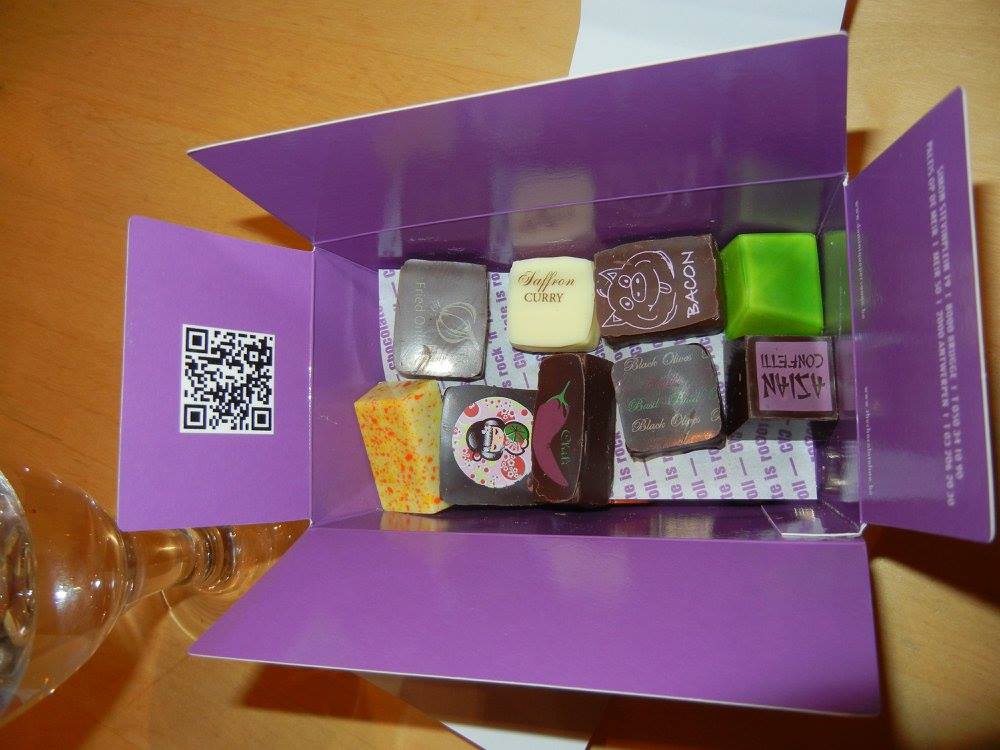
Cacao arrived in Europe in the mid-sixteenth century. Several centuries later, chocolate makers in the Netherlands, Switzerland and Great Britain had innovated new techniques for producing chocolate as we know it today. Belgium's great contribution to the chocolate world was the invention of the moulded bonbon or"praline"in 1912 by Jean Neuhaus Jr., from the famous eponymous Belgian chocolate company.
For the first time, this innovation allowed chocolatiers to easily fill a solid chocolate shell with a softer filling, a technique that enabled the creation of bonbons with varying textures and flavours (it's interesting to note that the truffle was invented in France around the same time, using a similar concept but in the form of a sphere).
The concept of the praline was quickly copied by other chocolatiers in Belgium and then around the world. Nowadays, Belgian chocolate still enjoys renown thanks to this contribution it made to the world of chocolate over 100 years ago.
Legal definition of Belgian chocolate
No strict legislation regulates the use of the term "Belgian chocolate." Of course, cacao, the raw material from which chocolate is made, does not grow in Belgium or indeed in any part of continental Europe.
Choprabisco, which represents about 90% of Belgian chocolatiers, tried to implement a Belgian chocolate code in 2007-2008 to regulate the use of the term. Under this code, chocolate can only call itself "Belgian" if the last steps of chocolate processing are carried out in this same country. However, in practice, this protocol has no legal weight and only applies to the companies who have signed the accord.
As for the definition of chocolate itself, Belgium is bound by the same Europe-wide rules as other European countries when it comes to defining white chocolate, milk chocolate, dark chocolate, etc.
In the present day; the concept of Belgian chocolate has grown to encompass not just moulded chocolates but also various chocolate products such as chocolate bars and moulded creations.
Is Belgian chocolate better-quality than other chocolate?
With no exact definition and no set of criteria that defines it, Belgian chocolate is not considered inherently better than any other type of chocolate.
You'll find plenty of poor-quality industrial Belgian chocolate; you can also find Belgian chocolatiers that make excellent chocolate using fine-quality traceable beans. Regardless of how meaningless the label is, it's very common to see chocolatiers from around the world proudly announcing their "Belgian chocolate" to give the impression of a superior product.
Ok, so if a chocolate isn't Belgian, where's it from?
There are many ways to define the origin of a chocolate, but in reality, it's rare to be able to say that a chocolate was 100% produced in one specific country. Cacao only grows well in tropical areas, and it needs to be fermented and dried really quickly after being harvested. This means that those processes are usually carried out on the or near the plantation itself.
In the case of a huge multinational company like Barry-Callebaut or Nestlé, farmers usually sell the dried cacao beans to an intermediary, who takes them to the village and sells them to another intermediary, who sells it to an export company, and so on and so forth until it finally ends up in the hands of a European or American corporation.
Once the cacao beans are safely dried, the next steps of toasting and grinding can be carried out anywhere in the world. In large companies, it's not uncommon for each step to be carried out in a different country. When you see labels that say "Swiss chocolate" or "French chocolate," it basically just means the last steps were carried out in those countries.
At Danielle Pacheco Chocolatier, we try to shorten the supply chain as much as possible. With fewer intermediaries, we pay less of a markup, but above all, it helps us sleep better at night knowing that a greater proportion of our money is going to the actual cacao farmers. This system also offers better traceability, so we have a firmer grasp on where our chocolate is from. Farmers who earn a fair wage and who maintain close relationships with the chocolate processers are better equipped to care for the cacao plants and post-harvest practices, which translates to better-quality cacao with more interesting and well-developed flavour profiles.
We primarily use chocolate from Xoco Gourmet, who runs plantations in Nicaragua, Honduras and Guatemala. The beans are processed into chocolate in the company's installations in Costa Rica under the careful guidance of chef chocolate maker Diana Cruz. We also work with chocolate by Original Beans, which sources its cacao from cooperatives in the Esmeraldas Coast, Ecuador as well as from an ethical women's cooperative in the Virunga mountains of Congo. The beans are imported to Switzerland for processing.
Depending on the flavour we're looking for, we select one or the other of these many types of chocolates to realize our artisanal aquí en Barcelona por una inmigrante canadiense. Puedes decir que nuestro chocolate es internacional 🙂