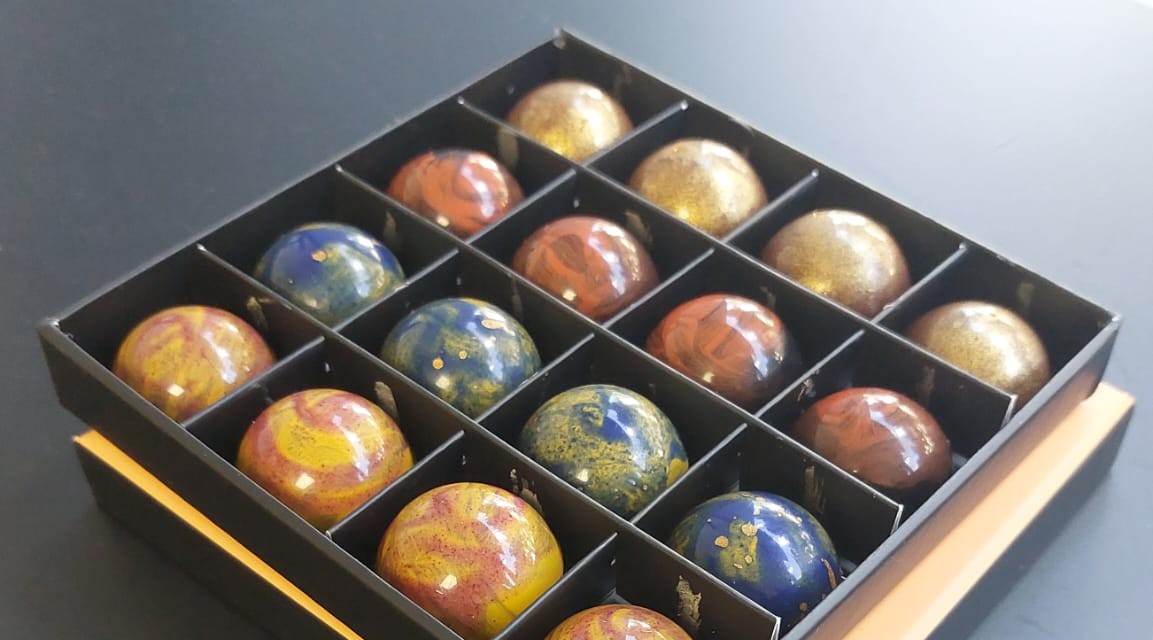
While pure chocolate doesn't usually expire per se, most artisanal bonbons DO expire.
Whether or not a chocolate product expires depends on its ingredients. We'll take a look at the different types of chocolate bars and filled chocolates and explore how to ensure you're enjoying chocolate at its best.
What determines the shelf life of chocolate?
As with all food, one of the most important factors when determining the shelf life of chocolate is its water content. Bacteria, mould, and other harmful microorganisms can only grow in the presence of liquid.
Pure chocolate contains mostly fat and sugar. Since it doesn't have any liquid, chocolate doesn't technically expire. It can develop a white sheen, it may lose some of its more complex flavour notes, but if we make sure to keep it away from moisture, chocolate can last for many years and still be perfectly fine to eat (tried and tested!). Milk chocolate and white chocolate are a little more delicate because they contain milk powder, but they're still generally not dangerous to eat. That's why chocolate bars tend to have a "best-before" date instead of a hard expiry date.
Filled chocolates are another story. If the chocolate filling contains liquid, then a filled chocolate will have a limited shelf life. The most classic bonbon filling, ganache, is based on a blend of chocolate and liquid cream. Chocolatiers follow certain steps to extend the shelf life as long as possible, but the maximum shelf life of a ganache is usually 2-3 months. After this, the bonbon can develop mould growth or proliferation of other harmful microorganisms. That's why it is very important to heed the expiry date and throw away the bonbons if you notice any weird flavours or visible damage.
At Danielle Pacheco Chocolatier, all of our fillings are balanced and calculated to ensure that our chocolates will be safe to consume within the stated dates as long as you have followed the instructions on the label and stored them in a cool, dry place between 14 and 16 degrees Celsius.
Alcohol-based fillings, fillings with high acidity, or fillings such as caramel with a high sugar content can last a little longer than a basic ganache. Fillings without liquid, such as nut-based fillings, also last a very long time.
Supermarkets and other resellers that stock bonbons that they don't make themselves have a problem, because it's very difficult to manage a stock of bonbons that expire every few weeks. That's why the manufacturers of these bonbons use other tricks, like artificial preservatives or alternative fats, to replace the liquid content. The most common technique is to use fats like palm oil in the filling. Palm oil has a silky texture that more or less imitates ganache, although if you've ever compared the taste and texture of artisanal bonbon vs. a supermarket bonbon, you'll agree there's no contest!
How to know if your chocolate is safe to eat
In most cases, if you've followed the storage instructions and you haven't reached the expiry date, your chocolate should be perfectly fine to eat before the expiry date. If your chocolate has been exposed to high temperatures or humidity, you might see white marks. These marks are simply the fats and sugars rearranging themselves inside the chocolate, and they don't affect the flavour or the shelf life. In fact, if you touch them, they should melt and disappear.
Rarely, and usually well after the expiry date, you might see mould growth. This can occur in a filled chocolate due to the liquid content, or even in a solid chocolate bar if it's been exposed to humidity (that's why we recommend against storing your chocolate in the fridge). If there is mould, do not eat!
What's the best way to store chocolate?
Ideally, you should store chocolate in a wine fridge at a temperature between 14 and 16 degrees Celsius. Even better if you put it in an airtight container, so it's not affected by the odours of other things in the fridge. Chocolate is also happy in a room-temperature cupboard, around 18 degrees Celsius.
If you don't have a wine fridge and it's hot in your house, another option is a regular fridge. When storing bonbons in the fridge, it is very important to put them in an airtight container and leave them inside the closed container for around 20 minutes after you take them out of the fridge. Wait until the condensation is gone before opening the container. By allowing the condensation to form on the box instead of directly on the chocolate, you can avoid the sugars in the chocolate absorbing moisture, which can make them sticky and causes them to lose their shine.
If you have some old chocolate lying around with white marks or less-than -ideal texture, don't throw it out. As long as it doesn't have mould and hasn't been exposed to moisture, you can use it to bake cookies or to glaze a cake.