
Have you ever wondered where chocolate comes from? Not everyone knows that chocolate comes from cacao, which is a fruit that's cultivated exclusively in tropical regions. This fruit grows directly from the trunk of the cacao tree from tiny, delicate flowers of which less than 10% will go on to become cacao pods.
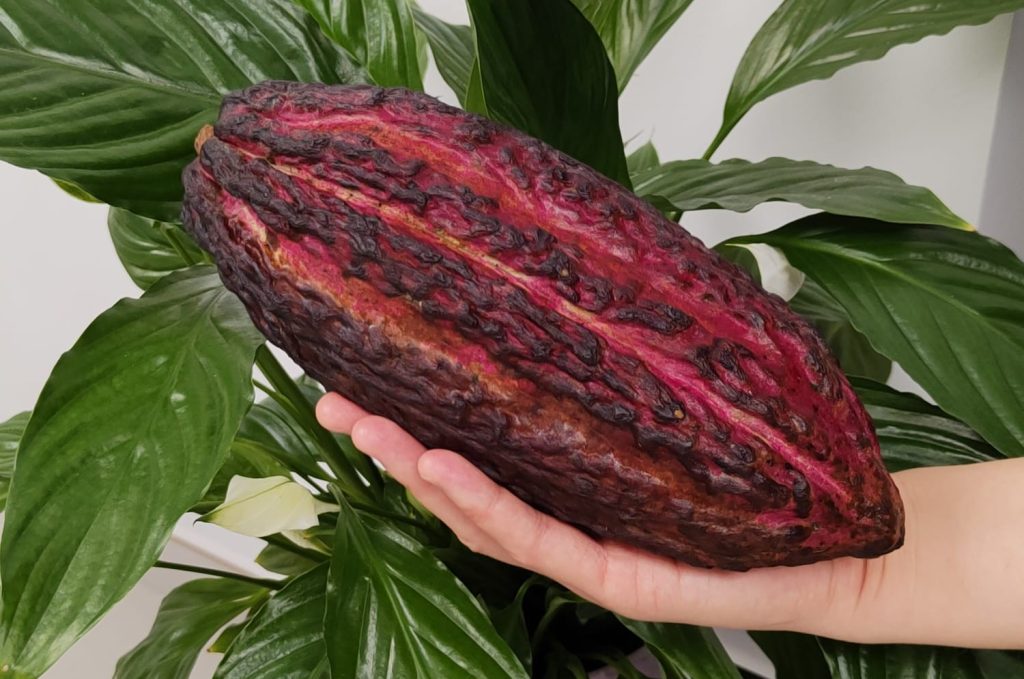
The cacao pod has an elongated shape measuring 10-32 cm and can come in a variety of colours, shapes and textures. Inside, it contains 30-60 seeds, which are what we use to make chocolate.
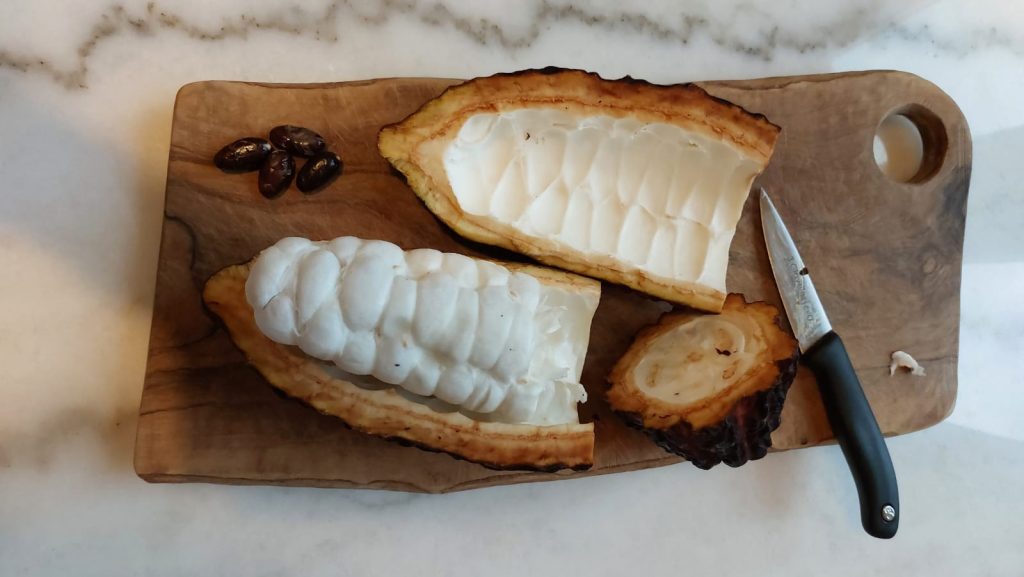
If you've never been to a cacao plantation, it can be a little difficult to imagine what the interior of a cacao pod looks like. We managed to get our hands on a fresh cacao pod here in Barcelona and we cracked it open to see what's inside!
Mucilage: source of flavour
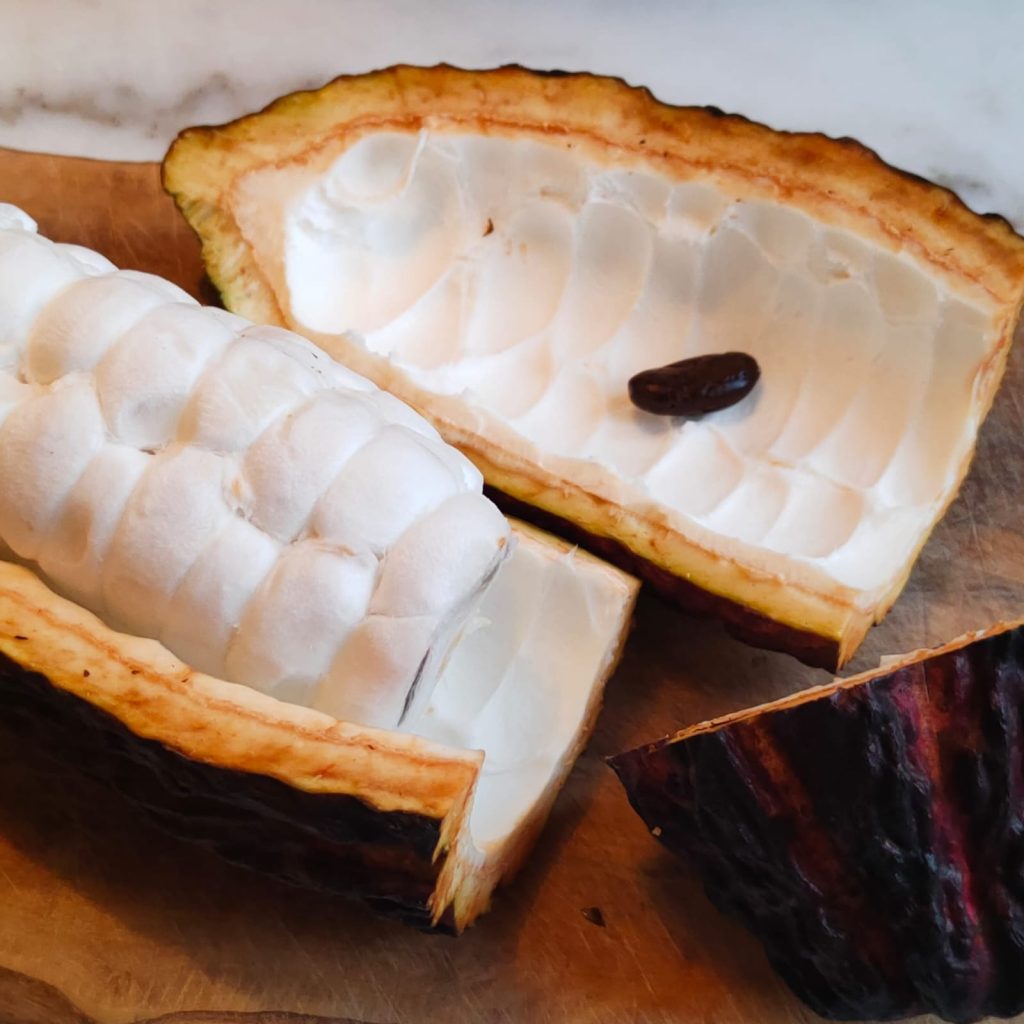
Cutting open the cacao pod, we see a fairly thick exterior layer, with a membrane protecting the inside. Inside the membrane, the first thing we notice is a slimy white substance. This substance is called mucilage and despite its less-than-appetizing appearance, it's actually delicious. We tried it and we'd describe the flavour as acid, fruity and slightly sweet, with notes of lychee and passionfruit. The flavour can vary depending on the type of cacao and the origin.
This mucilage is what imparts the flavour to chocolate during the fermentation process. Once the fermentation is completed, the mucilage is usually discarded, although in cacao-producing countries, sometimes people make a drink out of the fresh mucilage or eat the seeds with the mucilage directly from the pod.
Cacao beans: from nibs to chocolate
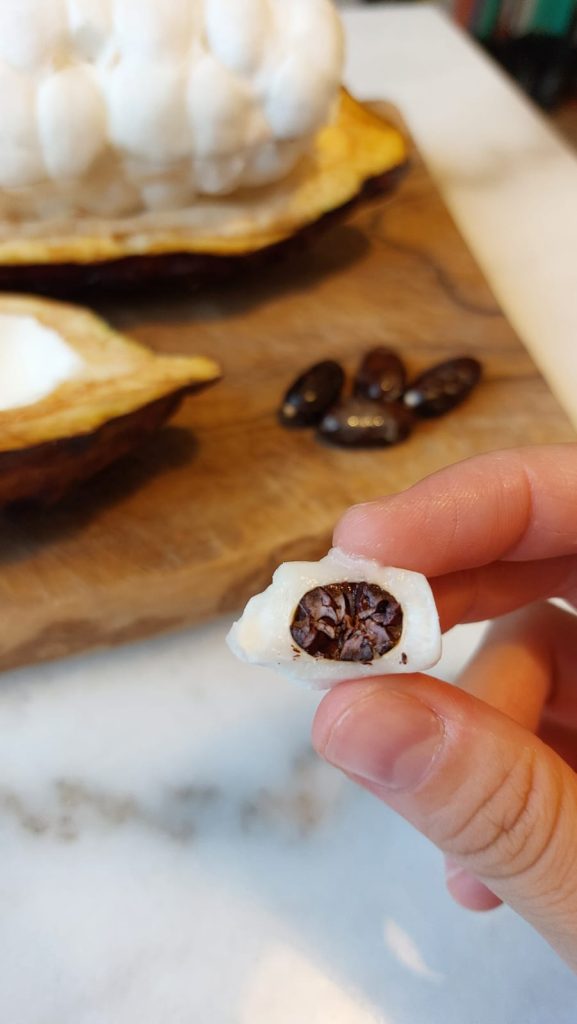
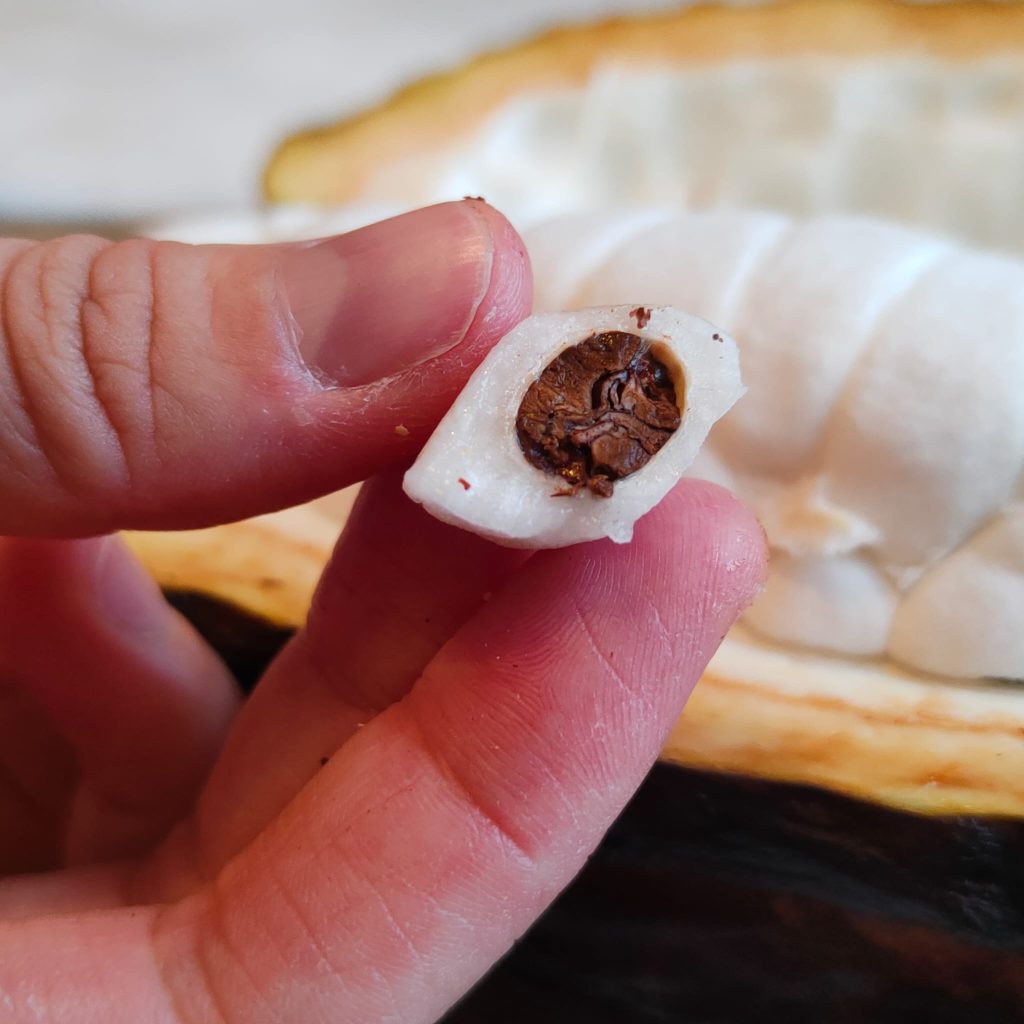
Inside the cacao pod we find several dozen seeds, commonly called "beans," more or less comparable to an almond in size and shape. Each bean is covered in a layer of mucilage.
After removing the mucilage we see the cacao bean, and if we break it open we'll see cacao "nibs" inside. These nibs are what we grind up to make chocolate. The colour of the nibs depends on the cacao variety. Usually they're purple, but the nibs of the criollo variety are a paler white, which is a sign of a finer-tasting cacao.
Cacao beans contain approximately 50% cacao butter and 50% cacao solids. Cacao solids are known for being high in antioxidants and other healthy compounds, while cacao butter supplies the texture and melting point responsible for chocolate melting in your mouth. These two components are separated by pressing them during the chocolate production process.
The exterior shell of the cacao bean is usually discarded, although it can also be used to make cacao infusions.
Cacao is unique among fruits in that we eat the seeds and throw away the flesh. Nowadays, many people are investigating different ways of using the other components of the cacao pod to minimize waste. We're starting to see mucilage in ice cream, drinks and other chocolate creations. It can also be freeze-dried and used as a natural sugar, while the husk of the cacao pod can be pressed and made into paper for chocolate boxes.